 |
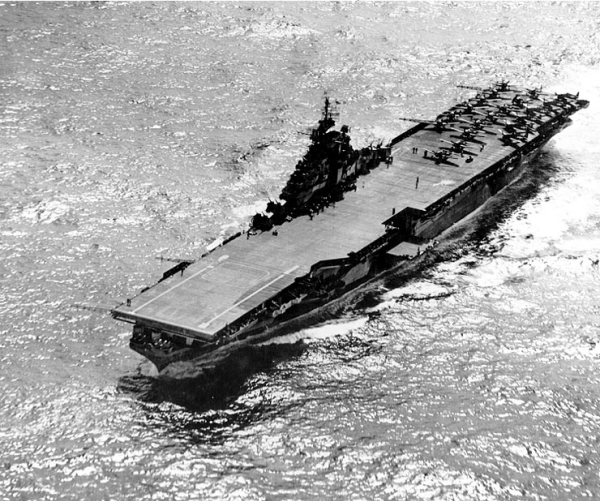
The USS Hancock ("Hannah")
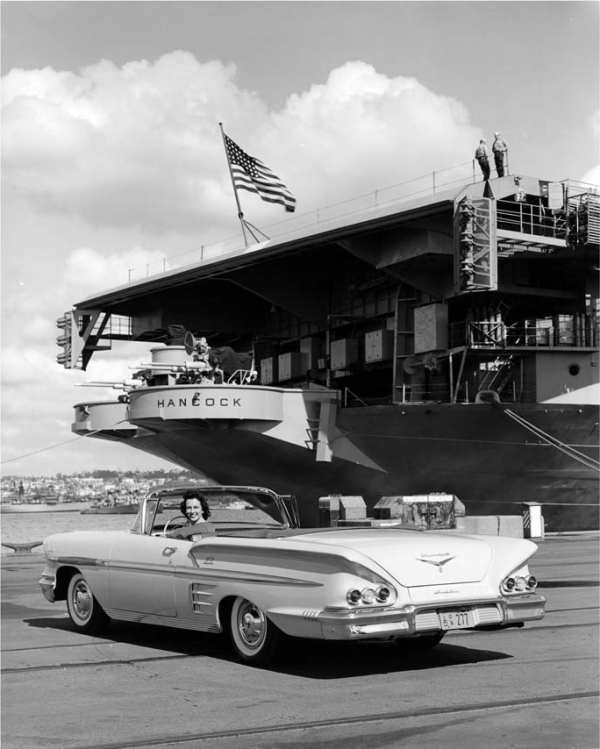
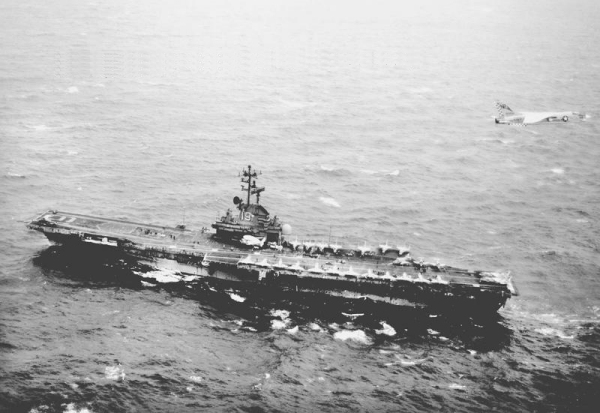
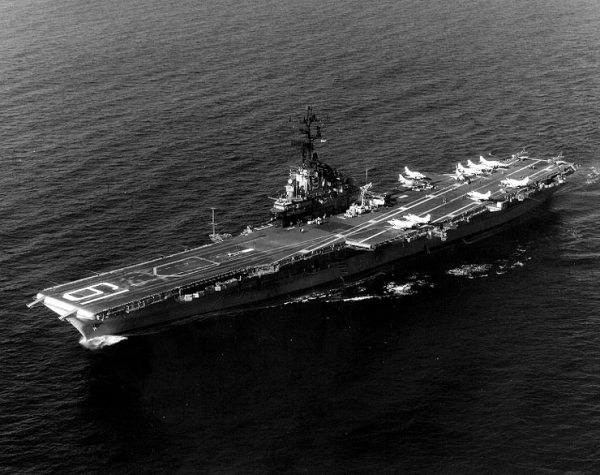
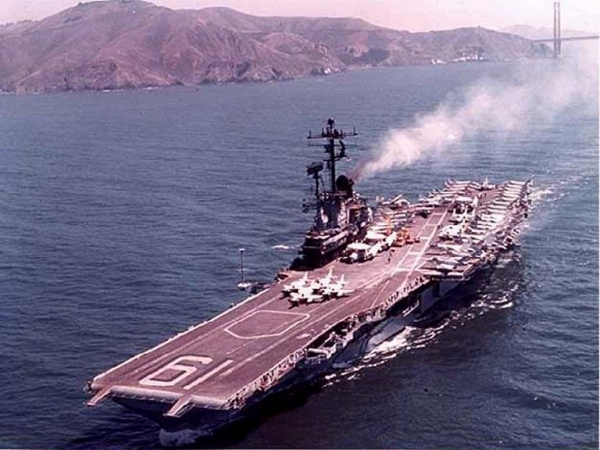
The USS Hancock (CV-19) was an Essex class aircraft carrier built during World War II by the Bethlehem Steel Co., Quincy, Massachusetts. It was the fourth US ship to bear the name Hancock but was originally named the Ticonderoga when the keel was laid on January 26, 1943. It was renamed Hancock on May 1st of the same year and launched on January 24, 1944.1
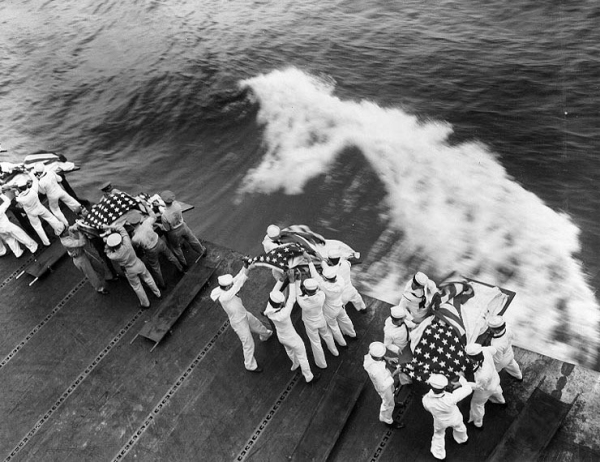
After out fitting in the Boston Navy Yard she was commissioned on April 15, 1944 and saw action serving in the South Pacific theater. Almost a year later, on April 7, a suicide plane cart wheeled across her flight deck and crashed into a group of planes while its bomb hit the port catapult causing a tremendous explosion. Although 62 men were killed and 71 wounded, heroic efforts doused the fires within half an hour enabling her to be back in action before an hour had passed.1 When the formal surrender of the Japanese Imperial Government was signed on board the battleship USS Missouri, Hancock's planes flew overhead. On April 29, 1946 she steamed to Seattle, WA to await inactivation and was decommissioned and entered the reserve fleet at Bremerton, WA.1
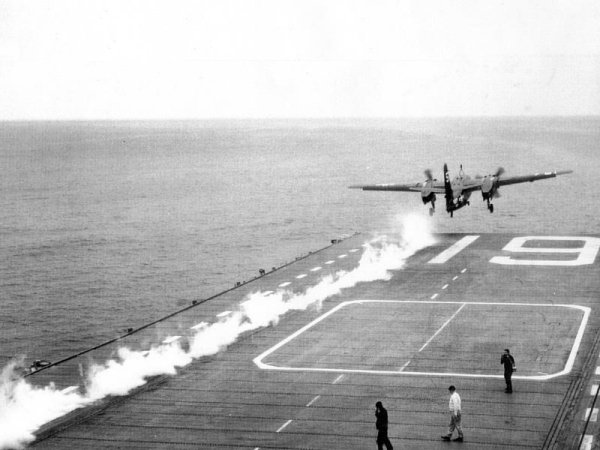
On December 15, 1951 the Hancock commenced conversion and modernization to an attack aircraft carrier in Puget Sound and was reclassified CVA-19 on October 1, 1952. She was re-commissioned on February 15, 1954 and was off San Diego in May of 1954 for operations along the coast of California. She was the first carrier of the United States Fleet with steam catapults capable of launching high performance jets. Commander Henry J. Jackson piloted the first aircraft, an S2F-1, launched by the C-11 steam catapult off the deck of the USS Hancock.1
After a year of operations along the Pacific coast that included testing of Sparrow I and Regulus missiles and Cutlass jet aircraft, she sailed 10 August 1955 for 7th Fleet operations ranging from the shores of Japan to the Philippines and Okinawa. She returned to San Diego March 15, 1956.1
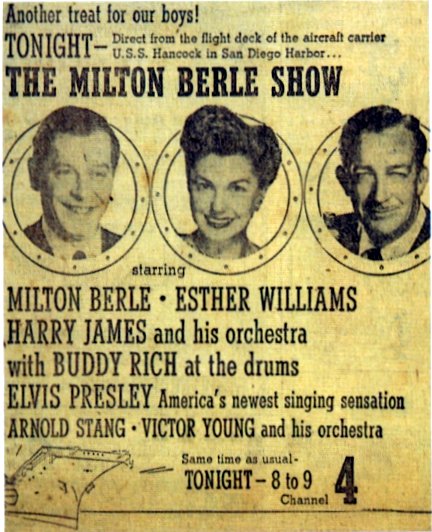
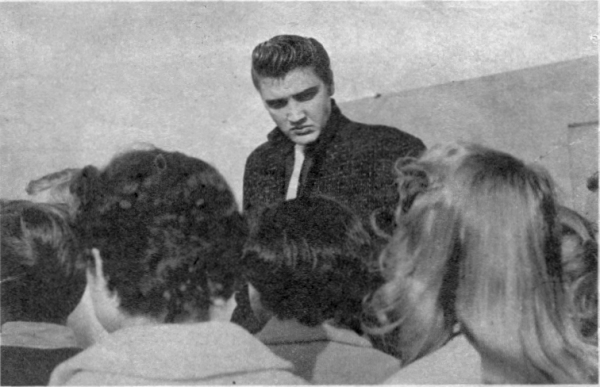
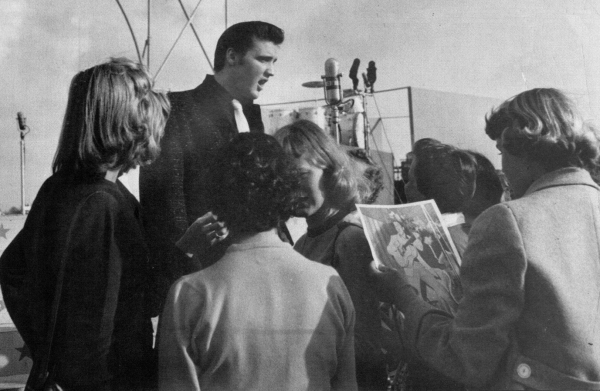
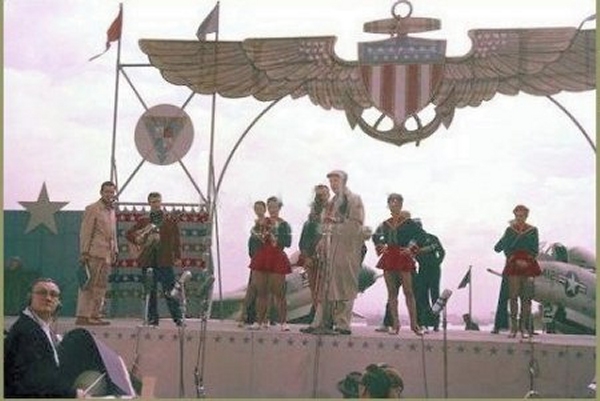
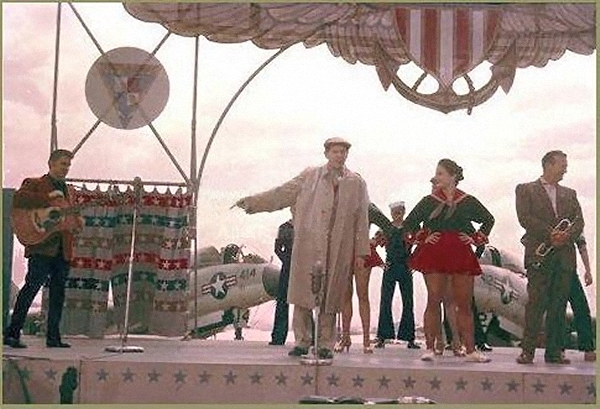
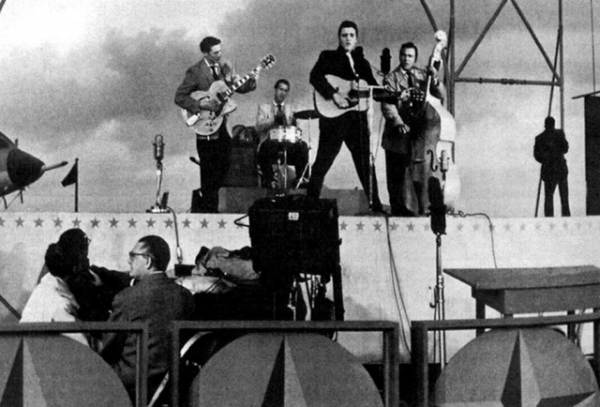
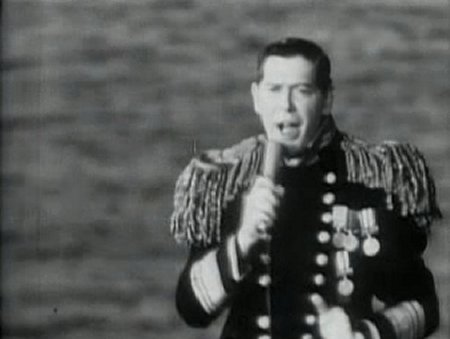
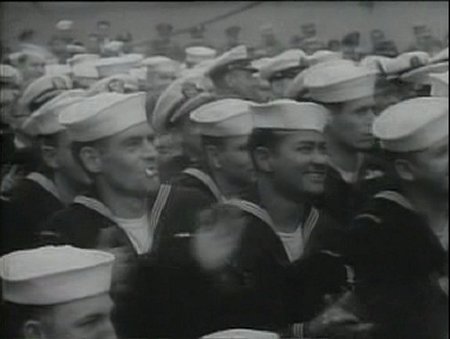
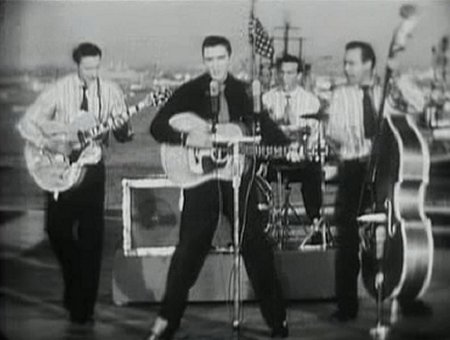
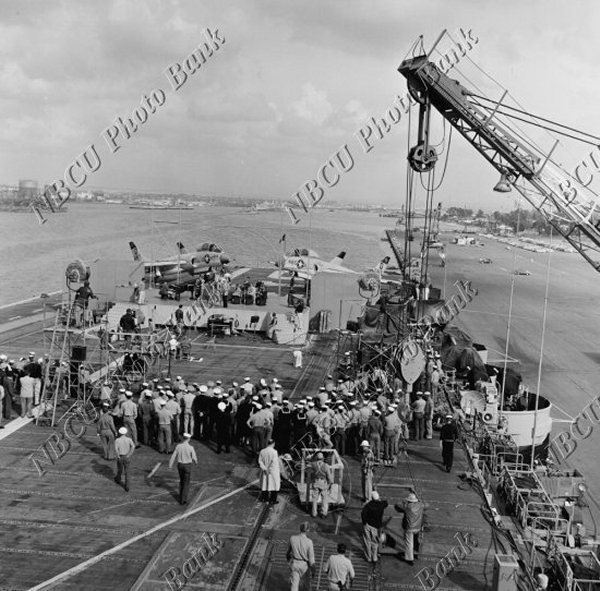
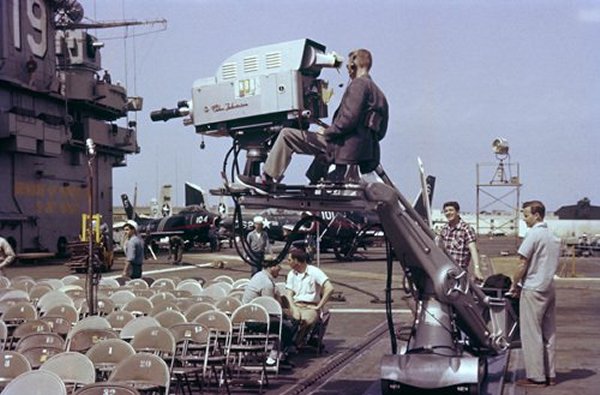
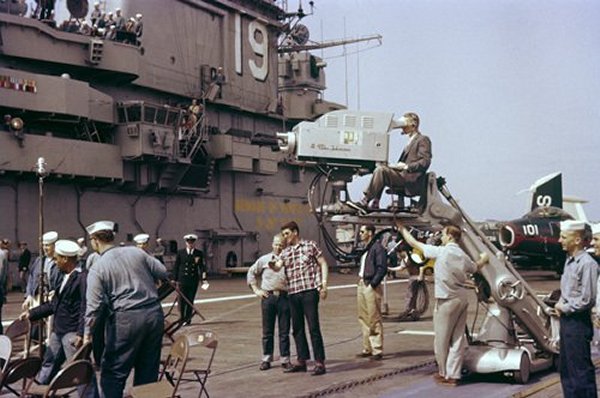
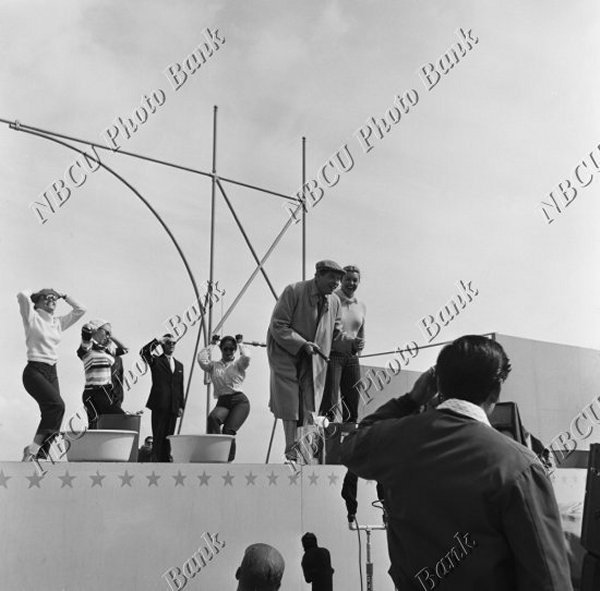
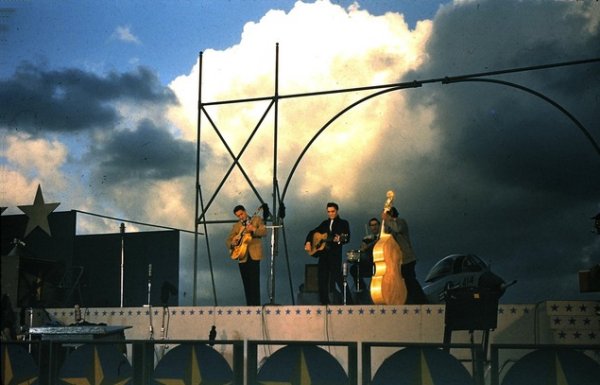
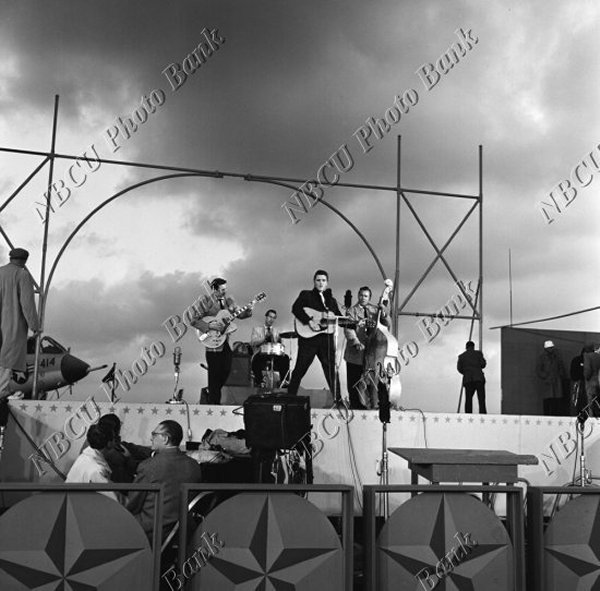
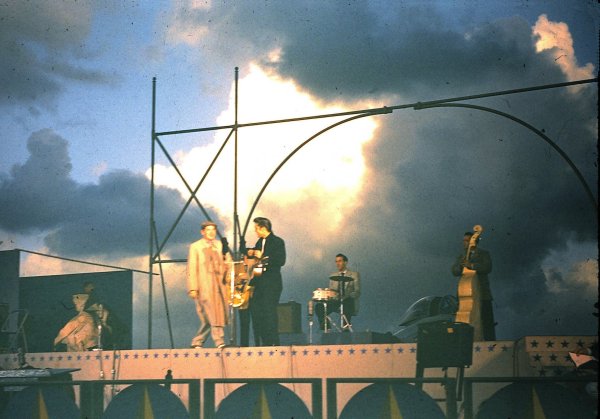
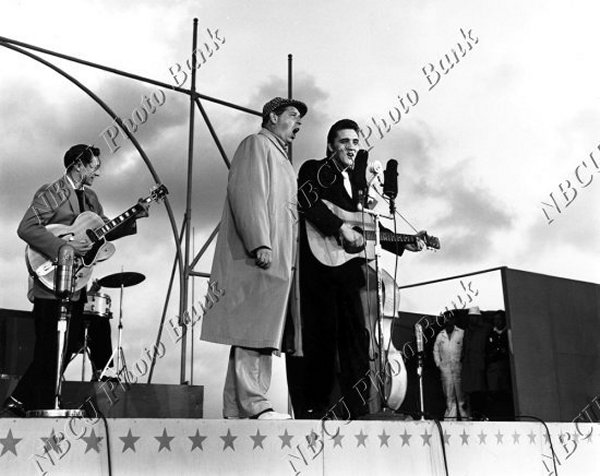
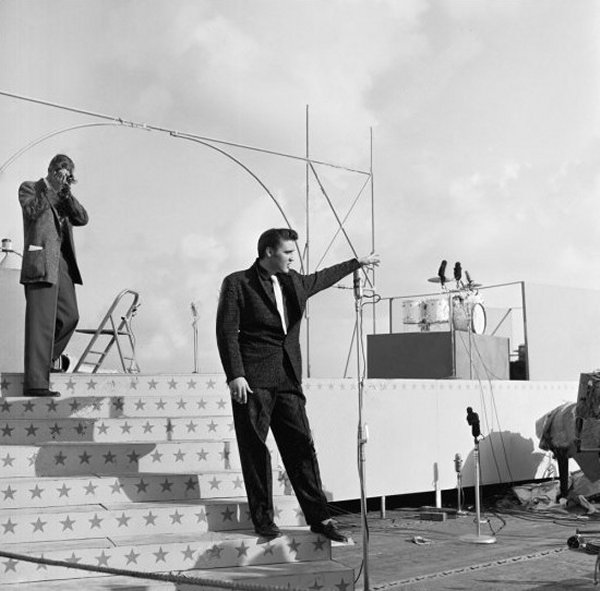
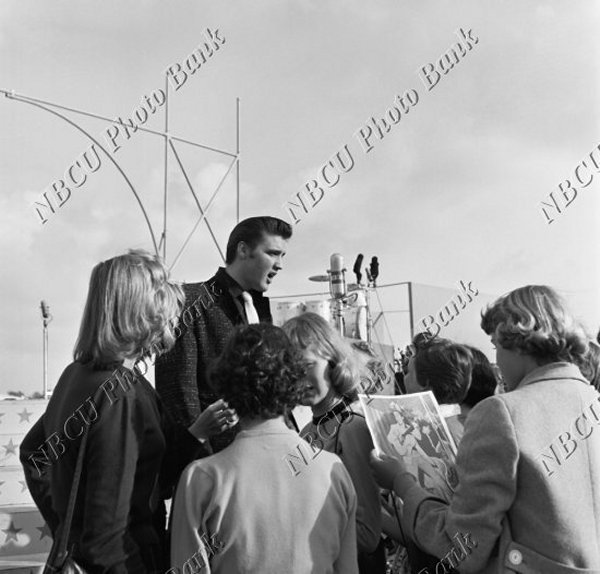
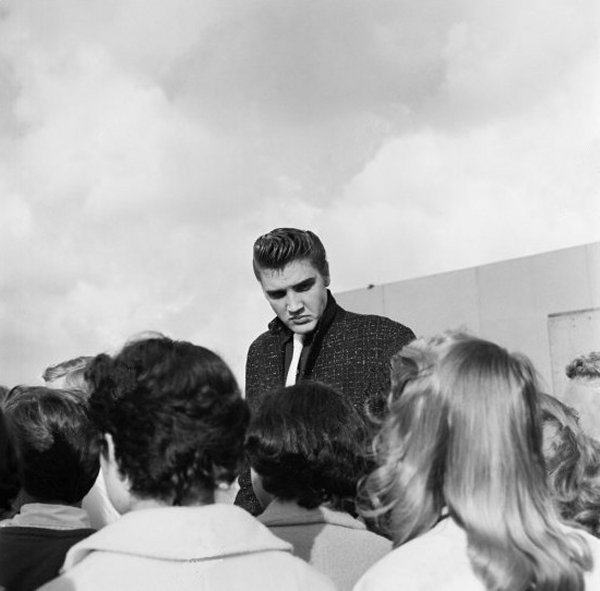
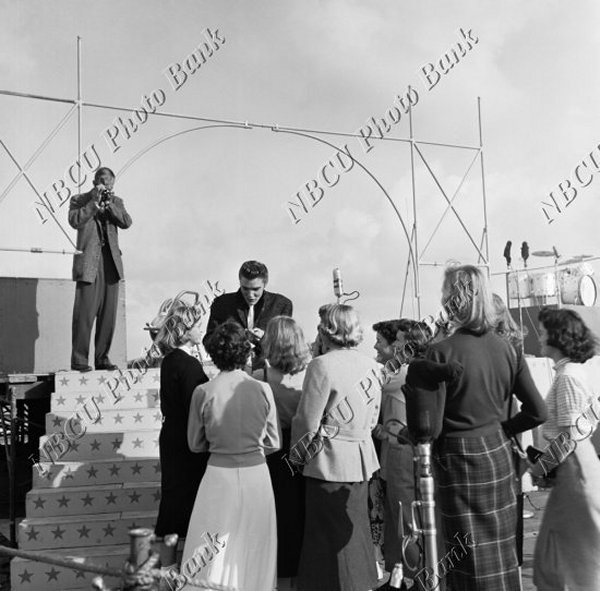
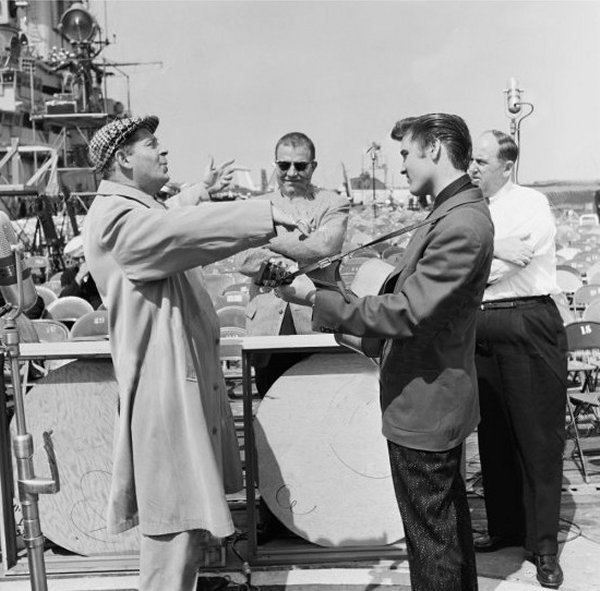
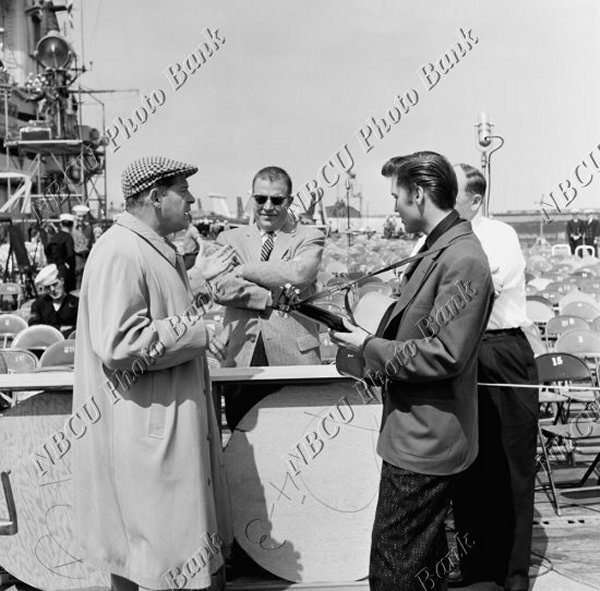
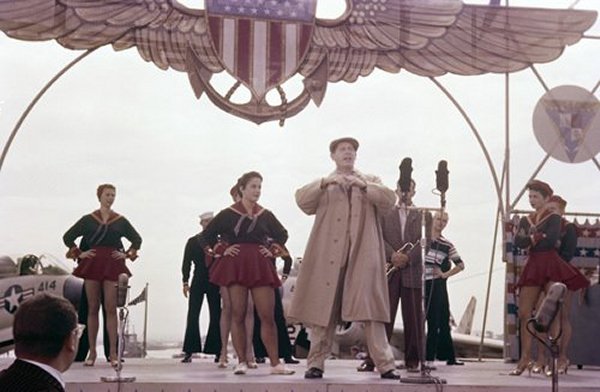
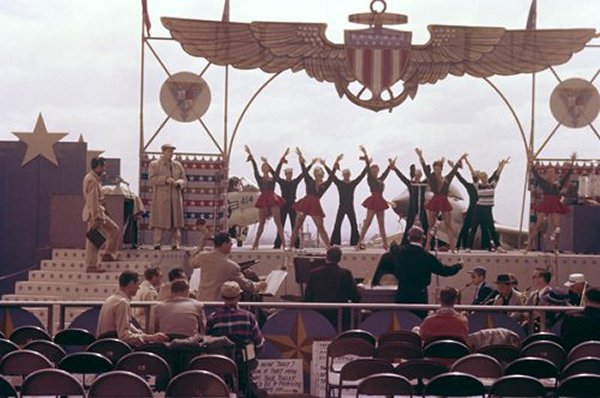
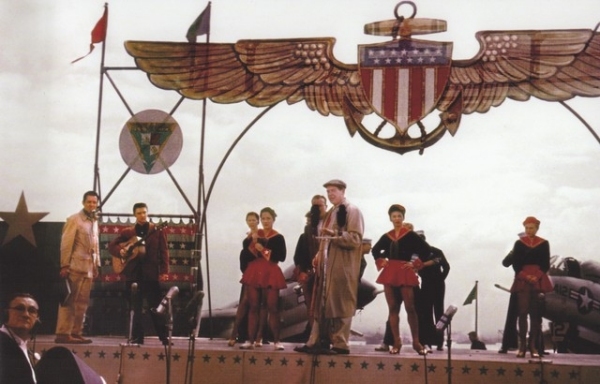
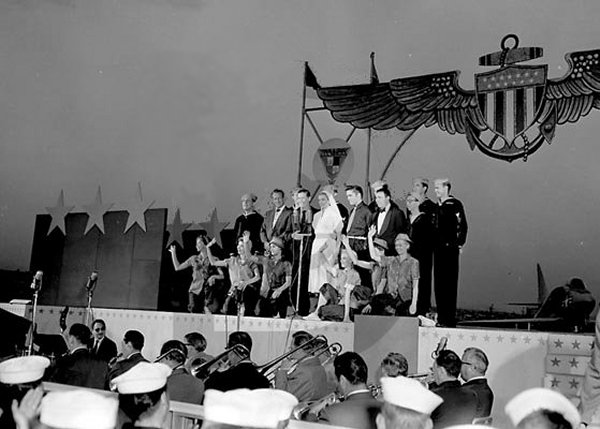
On April 3,1956 the Milton Berle Show, one of the most popular programs of the Golden Age of Television was broadcast live from the deck of the USS Hancock on NBC while docked at the Naval Air Base in San Diego, California. The show starred Esther Williams, Berle's comedy sidekick Arnold Stang and the Harry James Orchestra featuring Buddy Rich and featured Elvis, Scotty, Bill and DJ. Elvis Presley Fan Club members were sent a 12" x 18 1/2" TV/Concert double-sided announcement / promotional handbill from the Colonel to publicly thank Milton Berle for having Elvis perform on his program and to promote the upcoming concerts in San Diego.
Elvis was now being managed by Colonel Parker since Bob Neal's contract expired on March 14, 1956, the day after the release of Elvis' first LP. They had already appeared on television six times by then, on the Dorsey Brothers show. They performed three songs including "Heartbreak Hotel" and "Blue Suede Shoes". Elvis also performed a comedy sketch with Milton Berle acting as Elvis twin brother Melvin. It was the first time that they had performed to an all military audience.2
Scotty felt right at home on the carrier deck. He was the only member of the entourage who had been on a ship. "We had a ball," he said. "Uncle Miltie was great. He did the wig thing with Elvis and busted up a guitar. He did all kinds of goofy stuff. It was funny."2
The boys performed the next two nights at the San Diego arena drawing 11,250 screaming fans. Back in San Diego for the first time since his release from the Navy, Scotty tracked down John Bankson, a former Navy buddy and member of one of his first bands. Bankson's wife Analee, recalled Scotty phoning when he got to town. "He invited my husband down to see the first performance," she said. "He was backstage with Elvis and Scotty. When he got home, he told me he had helped Elvis tune his guitar. I said, 'Oh, you did.' Of course, we didn't know who Elvis was at that time."2
The Hancock was decommissioned ten days later, on April 13, 1956 for conversion that included the installation of an angled flight deck and then re-commissioned November 15 1956. By 1959 she was seeing service in Southeast Asia and in early 1960 participated in a new demonstration of communications by reflecting ultra-high-frequency waves off the moon.1
The Hancock returned to San Francisco in March 1961, then entered the Puget Sound Naval Shipyard for an overhaul that gave her new electronics gear and many other improvements. During most of the '60s and '70s she saw action in the Vietnam conflict participating in many deployments in the South China sea.1
After over thirty years of service The USS
Hancock was decommissioned on January 30, 1976, stricken from the Navy list the following day, and sold for scrap by the Defense Reutilization and Marketing Service (DRMS)
on September 1, 1976.1
The USS Hancock was awarded the Navy Unit Commendation and received four battle stars for service in World War II. length: 888 feet page added January 21, 2008 More Pix
This collection of pictures collected over
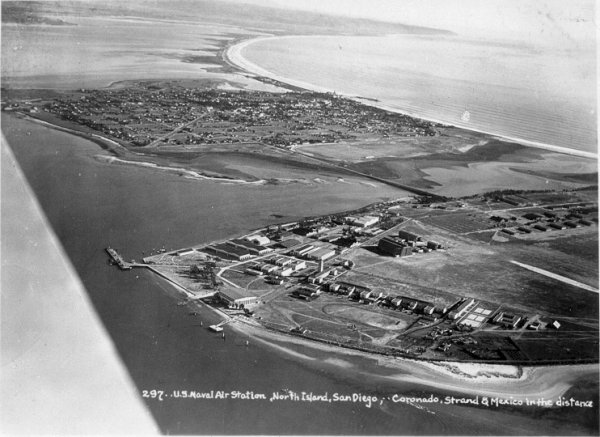
time from various sources and appended today for posterity. Naval Air Station North Island
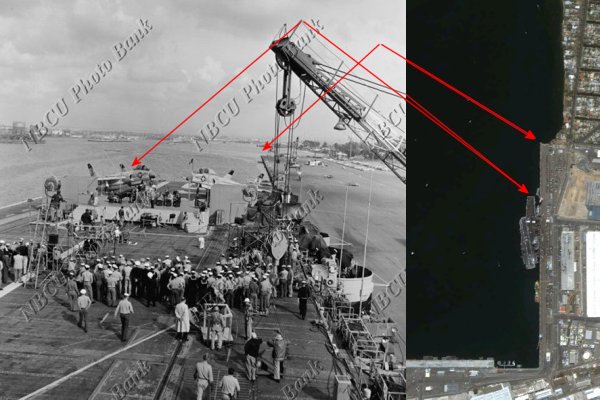
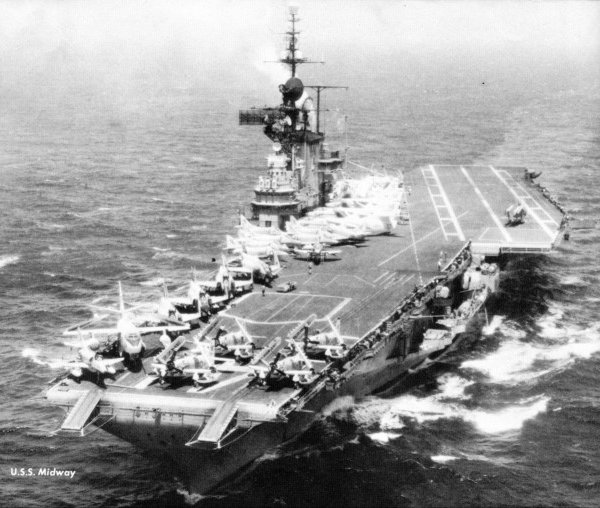
Having visited San Diego and the piers several times in the last twenty years I had often wondered exactly where the Hancock was berthed at the time of the Milton Berle show broadcast in 1956. One of the NBC Archive photos I posted recently showed some visible landmarks so I consulted with Worth Camp, who is a retired Captain of the USN and former flight officer that was assigned to a squadron aboard the USS Midway (CVA-41) in that era. The photo confirms the location as North Island so I've taken this opportunity to cover some significant history of the area that I didn't on the page for the The Venues section.
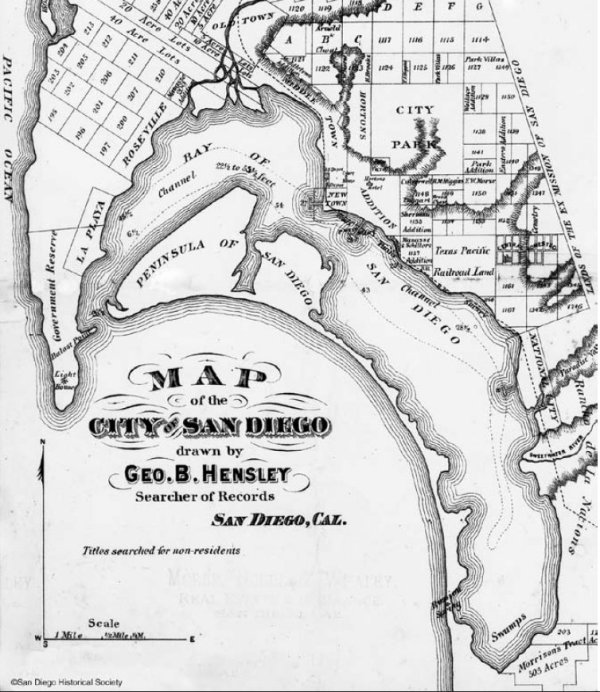
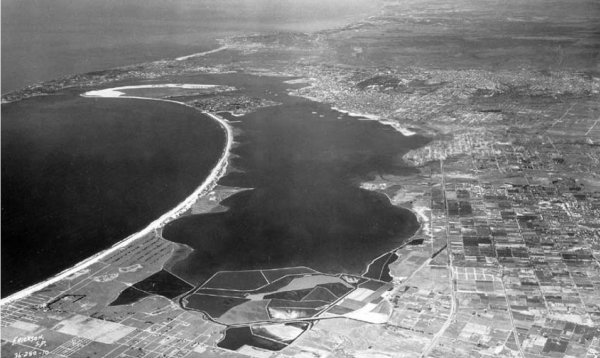
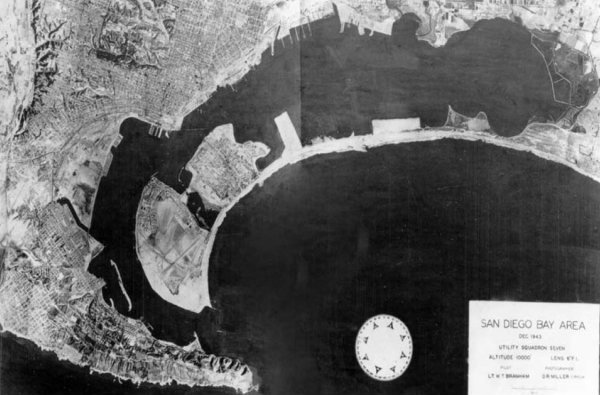
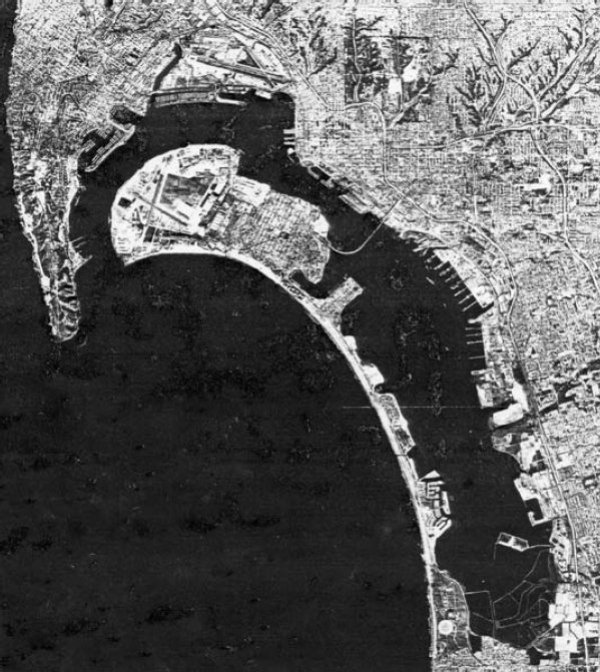
The Coronado peninsula in San Diego Bay was named "Los Coronados" by the conquistador Sebastián Vizcaino in 1602. Originally it was essentially two islands, North and South, connected by what's referred to as the "Silver Strand" and separated by an inlet called the "Spanish Bight." In 1885 it was purchased by developers Elisha Babcock and H. Story who sold lots to finance construction of a residential resort and the Hotel del Coronado on South Island, eventually becoming the City of Coronado while North Island remained an undeveloped and uninhabited sand flat.
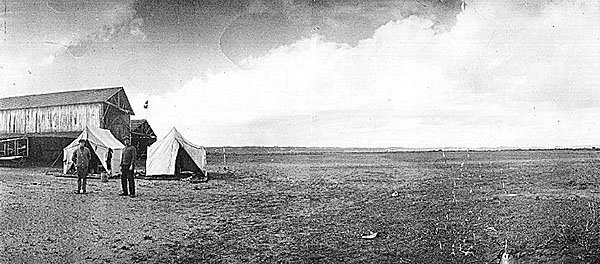
Glenn Curtiss, considered the father of Naval Aviation, obtained a lease to the property in 1910 as a location for flight training during the winter and to develop a sea plane. The isolation of North Island was ideal for the secrecy it afforded for his developmental work. In 1911 he successfully launched the first seaplane there, on the Spanish Bight, and offered to train Army and Navy pilots at no charge in order to interest the services in airplanes. The Army sent three people, Lt. George E. M. Kelly, Lt. John C. Walker, Jr. and Lt. Paul M. Beck and the Navy sent one, Lt. Theodore Gordon Ellyson. Ironically, Curtiss also trained the first group of Japanese aviators there which included Lt. C. Yamada who would later head Japan's Naval aviation forces in World War II.
Congress appropriated North Island in 1917 and commissioned two airfields, Naval Air Station (NAS) San Diego and the Army Signal Corps' Rockwell Field. The NAS officially began on November 8th when Lieutenant Earl W. Spencer, USN, the base's first commander reported to San Diego. Coincidentally, his wife was Wallis Warfield, who would later become the woman that King Edward of England gave up his throne for in 1936.
The Navy got its first aircraft carrier, the USS LANGLEY (CV-1), a converted cargo ship, in 1920. By 1924 it was homeported at North Island and by 1935 North Island was home to all four of the Navy's carriers: the USS LANGLEY, USS LEXINGTON, USS SARATOGA and USS RANGER. In 1937 the Army left and the Navy expanded its operations to cover the whole island.
Land access to the Naval Air Station's main entrance was originally across a causeway built across the Spanish Bight but during WWII the Bight was filled with dredgings from the bay combining the North and South Island land masses into a single body. During the war, North Island was a major continental U.S. base supporting the operating forces in the Pacific. Those forces included over a dozen aircraft carriers, the Coast Guard, Army, Marines and Seabees.
In 1948, the base moved into the jet age when Fighter Squadron 52 (VF-52), based at North Island was designated as the Navy’s first jet training squadron and in 1955 Naval Air Station San Diego was renamed as Naval Air Station North Island (NASNI).
According to Worth, the Hancock was a newly built WWII straight deck attack carrier, very effective at the end of the war in the Western Pacific, including the fall of Japan. The best of the remaining 1945 WWII aircraft carriers (CVAs) were redesigned into angle deck attack carriers circa 1955-56 for the latest jet fighter bombers. They were launched with the new high powered steam catapults.
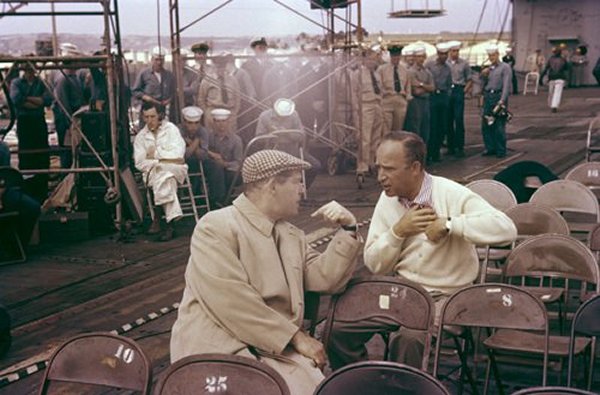
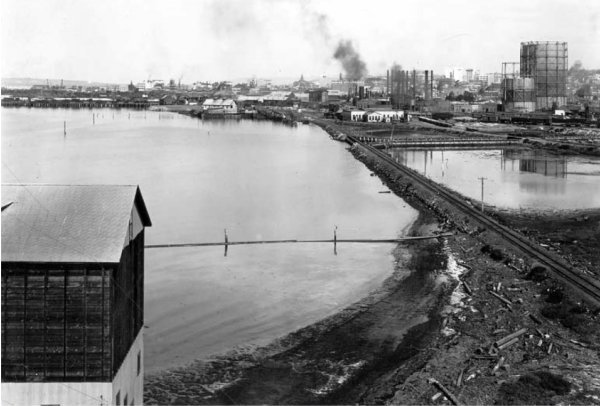
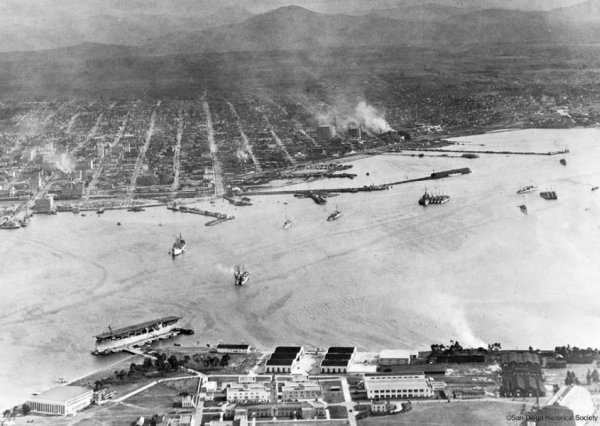
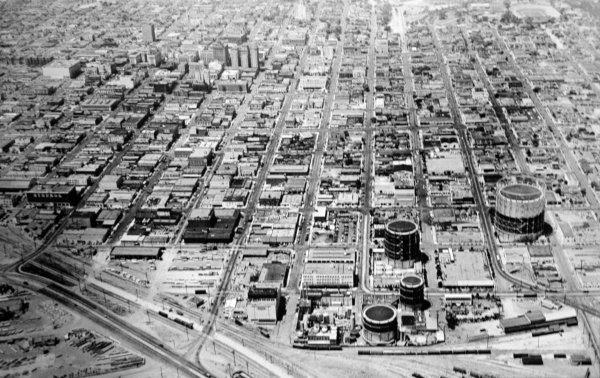
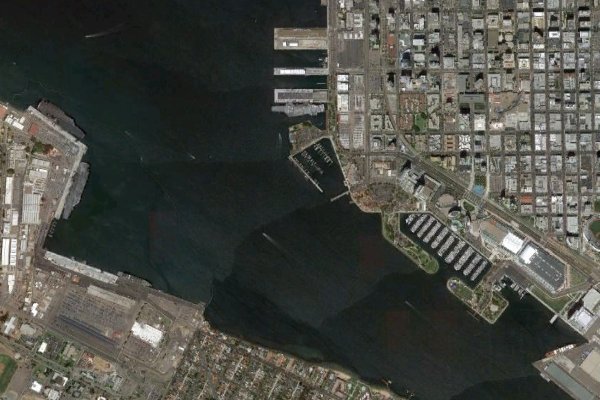
The Hancock arrived in San Diego on March 15, 1956 and while there was used for the Milton Berle show broadcast. The NBC photo shows it to have been berthed at the time along the newer pier(s) created with the filling of the Spanish Bight. The gas works in the industrial area around the bottom of Eight Avenue are visible on the left across the bay.
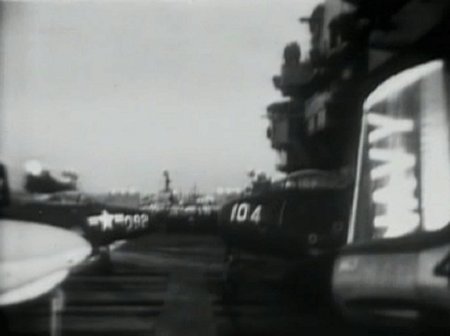
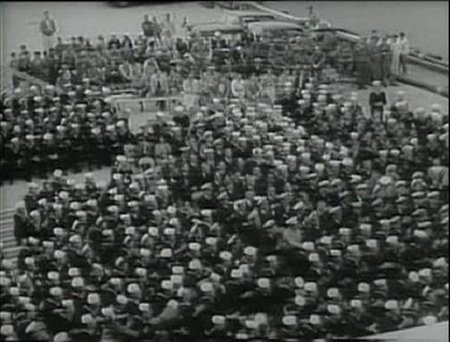
According to Worth, the flight deck has the aircraft of the era on the flight deck indicating that the ship was still an active ship for pilot training. The size of the crowd indicates these men are the “ship’s company.” If the air group was aboard, I would expect a larger crowd. The air group only comes aboard when getting ready for deployment. Our Midway would have had 3,000 enlisted men, and just over 300 officers with both the ship’s company and the air group. The Hancock’s total should have been at least 2600 men and 230 officers.
The Hancock was decommissioned ten days after the show and according to Worth the shipyard at Hunter’s Point (San Francisco) was likely its next stop for conversion before re-commissioning in November. After the Hancock’s conversion to an angle deck carrier she sailed for West Pac with over 60 planes, 4 of which were a detachment of A3Ds from NAS Whidbey. The Hancock was on station with the USS Midway 1958-59.
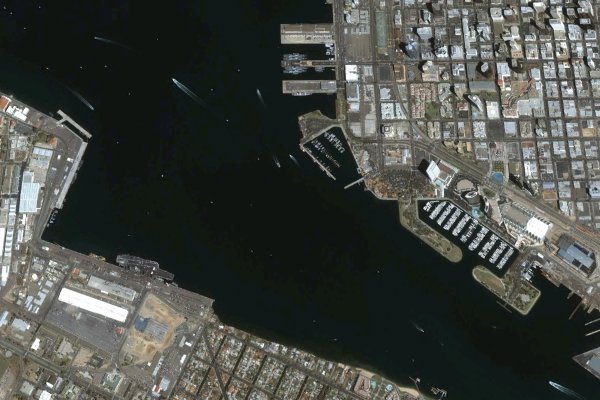
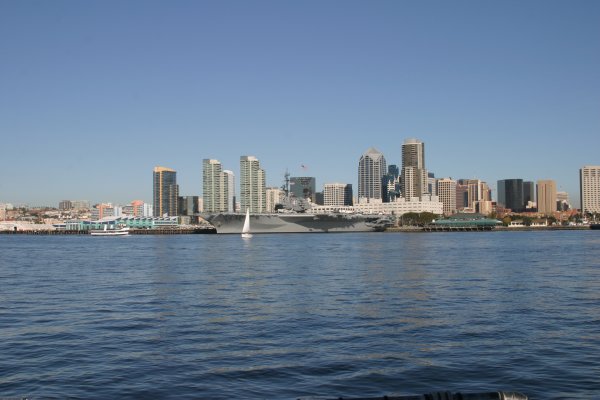
NASNI was granted official recognition as the "Birthplace of Naval Aviation" by a resolution of the House Armed Services Committee on August 15, 1963. It is now one of two large Naval bases remaining on the West Coast. Though the Hancock was decommissioned and sold for scrap in 1976, in 2004 the USS Midway became a permanent museum on display at the former Navy Pier in San Diego across the bay from where the Hancock was docked in 1956.
The history of the Naval Air Station North Island and Coronado presented here was compiled from various sources, including Linda A. Canada and The San Diego History Society, the Glenn Curtiss Historical Society and the CNIC // Naval Base Coronado. Special thanks to Worth Camp for his assistance with this. In addition to being a retired Navy Captain, is a friend and fan of Scotty's site and an alumni of El Dorado HS where the band played in 1955. While still in college he and his future bride-to-be had seen them perform in Newport, AR. Worth was the same age as Elvis and entered the Navy in Memphis the week before Elvis reported for his draft physical in January of 1957.
|
||||||
| All photos on this site (that we didn't borrow) unless otherwise indicated are the property of either Scotty Moore or James V. Roy and unauthorized use or reproduction is prohibited. |